Data centres
Fire rated glazed partitions for data centres
In every other building type the compartment protects people. Here it also protects the thing the building exists for — and equipment cannot walk out.
15kW/m²
The EW threshold, at one metre
42min
FT-CW insulation, measured
120min
Integrity
What changes in Data centres
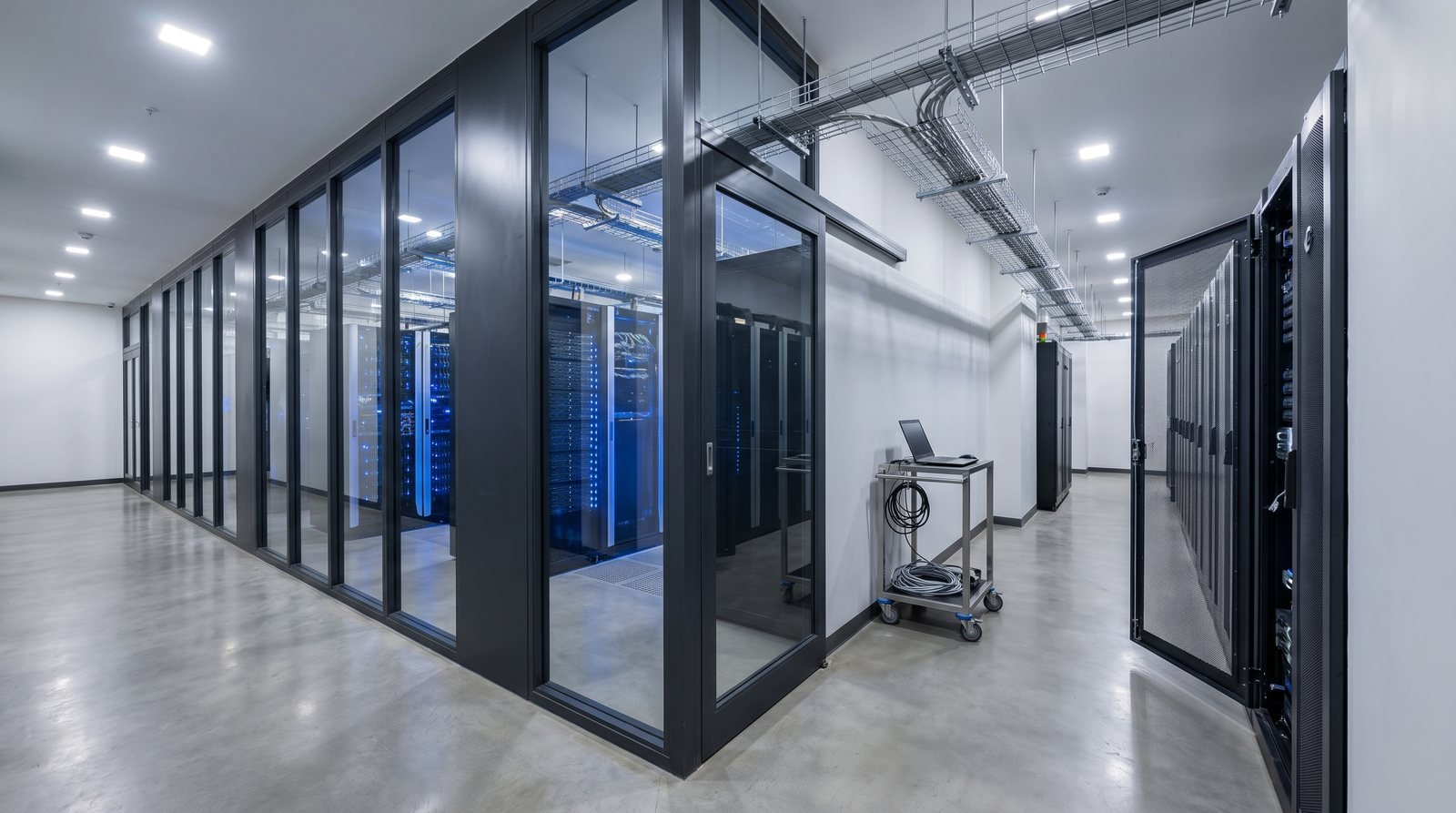
This is the sector where EI and EW stop being pedantry
EW means radiated heat at one metre from the unexposed face stays below 15 kW/m². That threshold was set so that somebody can move along an escape route past a burning compartment. It was not set so that a rack of equipment can sit in it indefinitely.
A person passing a glazed boundary is exposed for seconds. A cabinet a metre from it is exposed for the whole duration of the fire, and long before the compartment loses integrity the plastics inside it have deformed and the drives have gone. So a consultant protecting a hall is asking a different question from one protecting a corridor, and the answer is the insulation figure — the number that says how long the unexposed face itself stays cool.
Which is why this page prints insulation plainly. FT-CW measured 42 minutes — a real figure for glazed steel, and the honest one. A supplier quoting EI120 for a comparable glazed assembly is quoting something a report does not support, and on this sector that difference is the specification rather than a footnote.
Suppression is a gas-tightness problem too
A data hall on gas suppression has to hold a concentration long enough to work, which makes every boundary an envelope question before it is a fire question. Doors and partitions in that envelope are sealing elements: an automatic bottom seal that drops as the leaf closes, a joint gasket that is continuous, glazing beads that seat on both faces.
Steel helps here for an unglamorous reason. It moves less than the alternatives at temperature and it holds a gasket seat, so the detail that seals the room cold is the same detail that is still there warm.
Seeing into white space is a security requirement
Data halls are surveilled, and a solid compartment wall creates a volume nobody can see into. A glazed rated partition keeps the line of sight from the corridor and from the camera, which is why these buildings glaze boundaries they could easily have built solid.
The trade is that a glazed boundary is where the insulation figure comes from. Getting both means treating the vision requirement and the rating as one specification rather than two, which is a conversation to have at design stage and an expensive one to have later.
Steel systems made by Firetec. The frame is specified together with the glass it holds, rather than assembled from whatever is available — which on a rated assembly is the difference between two components that passed and one that works.
2 systems
What this sector specifies
Classifications are what the test reports record. Where older marketing material runs ahead of a report, this site prints the report.
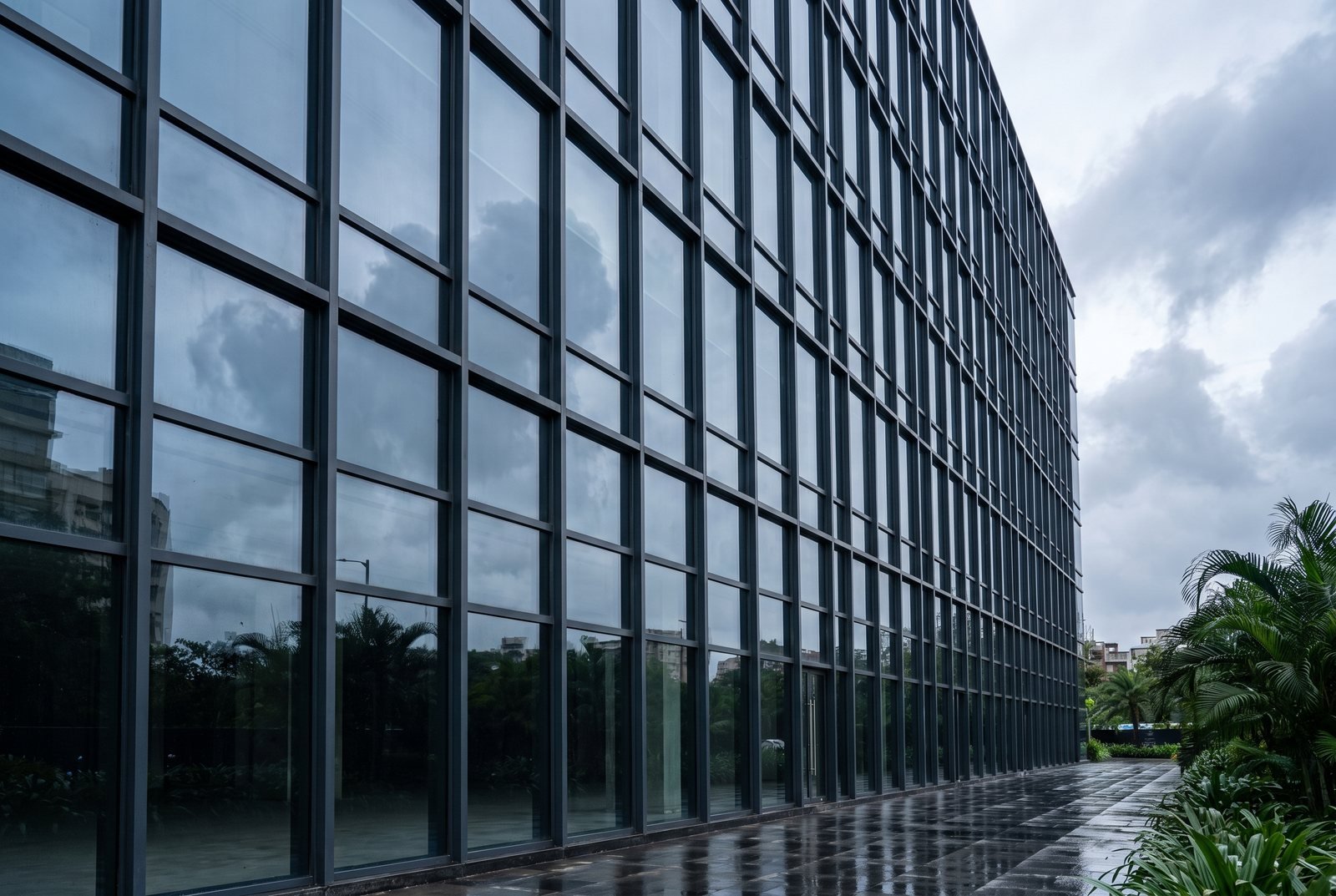
FT-CW
Fire Rated Curtain Wall
Mullion and transom curtain wall on a slim 45-60 mm face. The curtain wall was intact on both faces at the end of a two-hour test.
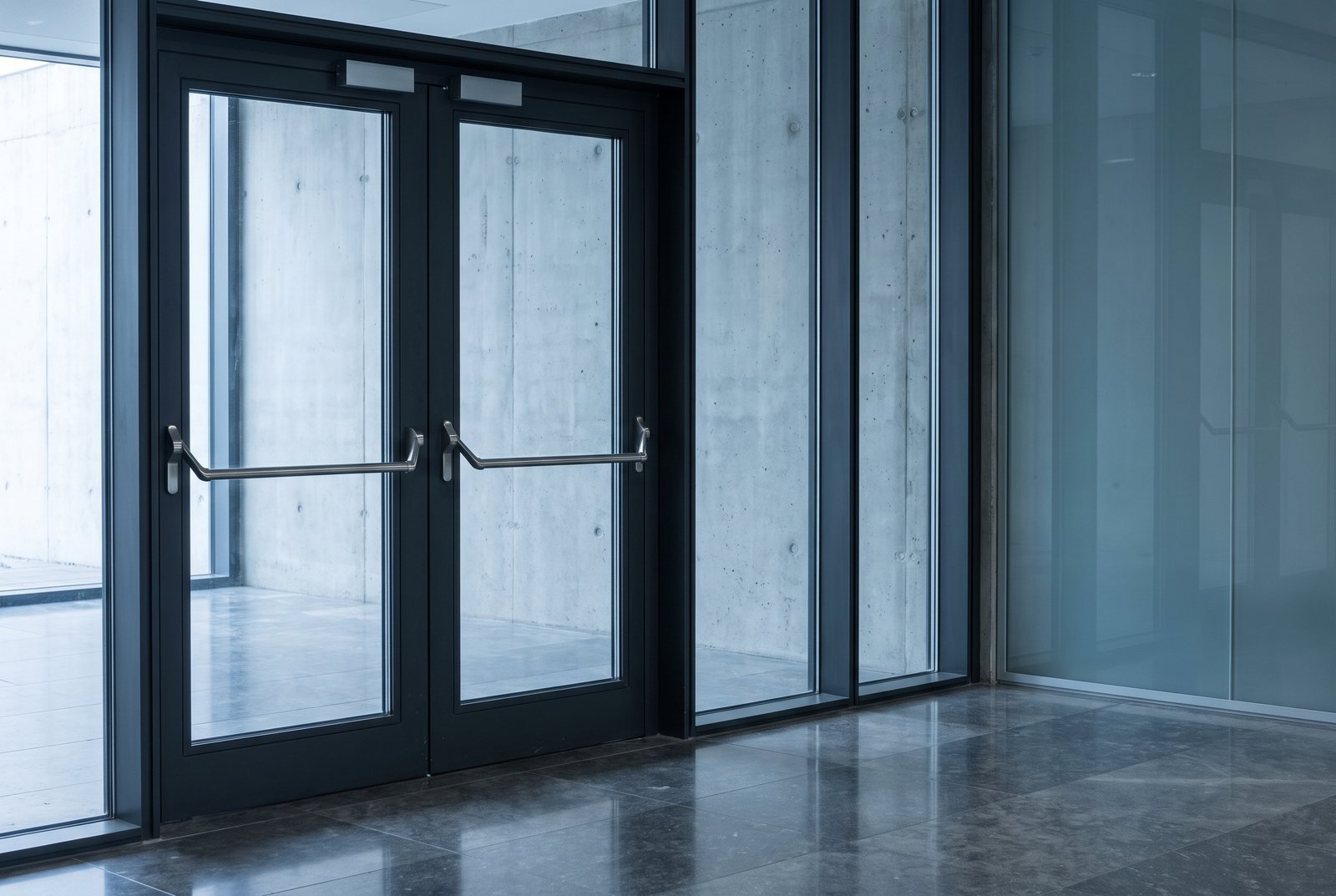
FT-PD
Fire Rated Doors & Partitions
Steel framing for building entrances, lift lobbies, server rooms and corridors. A two-hour fire rating - 120 minutes integrity and 120 minutes radiation control - classified E120 / EI30 / EW120.
Evidence
What is behind the numbers on this page
Four laboratories, described in prose on the system pages. No report, certificate or scan is reproduced anywhere on this site.
Codes and compliance
Government and PSU data centre work is specified against the National Building Code, which Firetec’s fire systems are developed against.
| National Building Code | Developed against NBC norms | Firetec |
|---|---|---|
| Where the testing was done | Two NABL accredited laboratories covered by ILAC for the fire tests, and TBRL Chandigarh (DRDO) and NFSU Gandhinagar for the ballistic trials | Test reports |
Next step
Request the catalogue
Profile geometry, component schedules and typologies for all three systems. Tell us what you are specifying and we will send the test reports relevant to it.
Or talk to a person